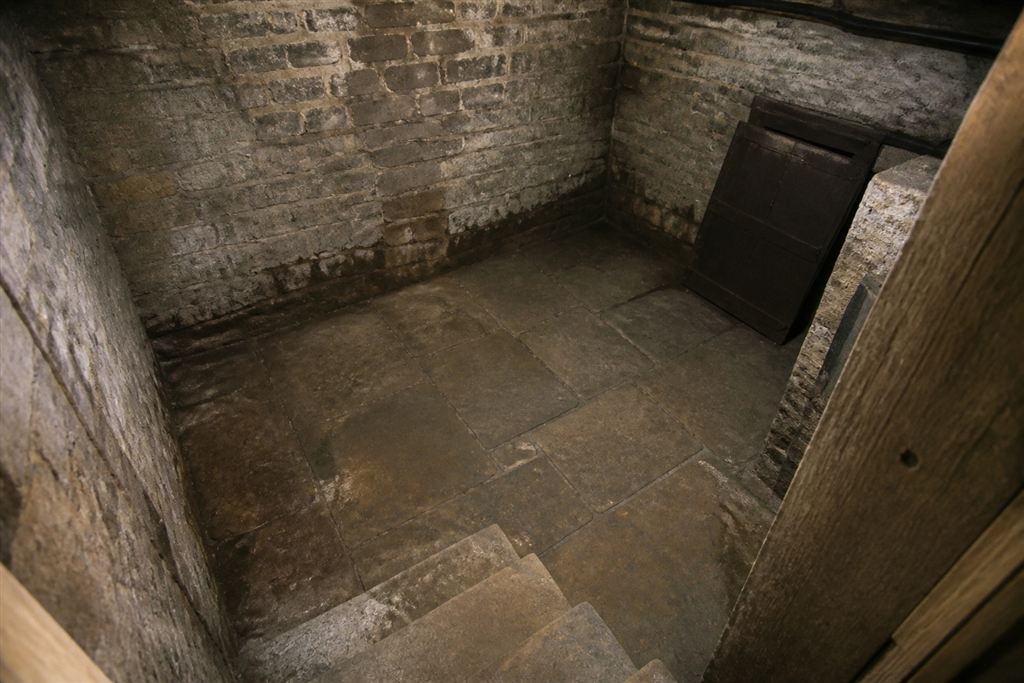
BS 8102 in the language of a one-room party-wall cellar
A Street Lane shopkeeper does not need specifier-speak. On a High Moor through-semi or a Moortown Corner stock cellar, BS 8102’s three types collapse to this:
- Type A tries to stop water at the surface of the wall (slurry, bitumen, sheet). Fine on a stable nib. Poor as the only defence when the neighbour’s cellar is wet and a hatch sits in the pavement.
- Type B is waterproof concrete as structure. Nobody poured a Type B box under a 1930s Street Lane parade.
- Type C manages water that arrives. Cavity drain membrane + channel + sump. This matches a small room you still have to walk through with a crate of stock.
We will mention cavity drain membrane because that is the liner. We will mention bs8102 because that is the standard. We will not pretend a one-room utility is a deep new basement.
tanking a cellar on a Street Lane through-semi cellar tanking when the shop already has slurry
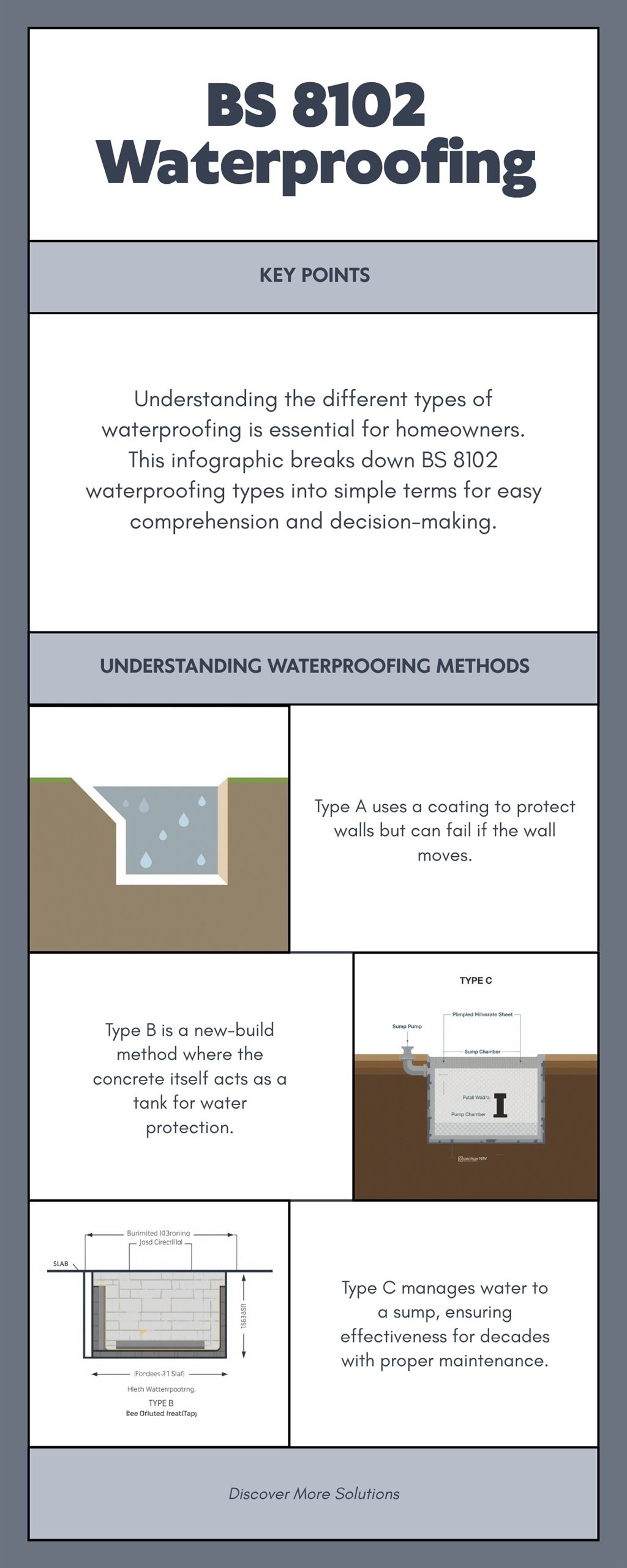
Diagram — BS 8102 types in plain English. Illustrative, not a site photo.
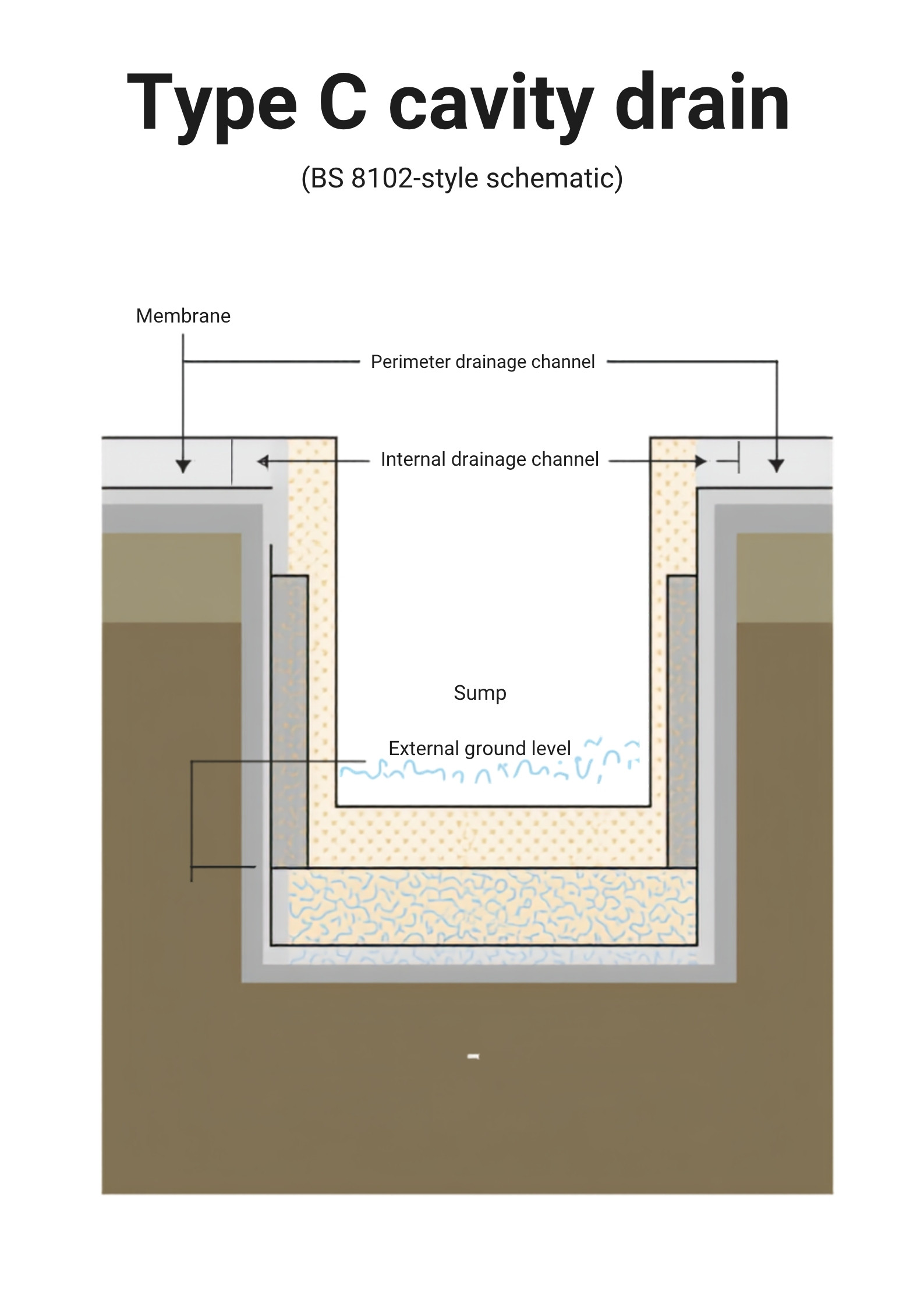
Diagram — how a Type C cavity drain system works. Illustrative, not a site photo.
Where a sump can discharge on this plot type
Alwoodley’s larger plots sometimes have a rear combined drain under a garden. Moortown often does not. Discharge options the survey actually checks:
- a combined drain in the rear ginnel or under the back scullery of a through-semi — if the invert is low enough for a pumped rising main
- a shop cellar that already dumps to the Street Lane sewer — if Yorkshire Water / the owner’s right to discharge allows a pumped connection
- not a new soakaway under a pavement hatch
- not a pipe across the Ring Road verge
- not an assumed rear lawn
If the invert is too high, Type C still works only if we can find another legal outfall. If we cannot, we say the job is not a Type C job rather than invent a garden that the plot does not have. where a sump can discharge with no rear yard
Cellar waterproofing systems, without the catalogue
Secondary phrases belong here as explanation, not as extra money pages: waterproofing cellar walls, cellar waterproofing systems, basement tanking services, basement tanking membrane. On this domain they all point back to a specified Type C (or an honest short Type A repair) in Moortown. We do not sell membranes by the roll. We do not list forty towns.
A shop cellar may need a maintainable cavity — access panels that a tenant can reach after hours, not a lining buried behind a fitted bar. A through-semi utility may need the channel kept off the neighbour’s brick until the Party Wall notice is in. Those are Moortown detailing notes. They are why the survey exists.
Standards and guidance (real sources)
For the published code of practice behind Type A / Type B / Type C language, see BS 8102 on BSI Knowledge and the Property Care Association’s structural waterproofing overview. Moortown Cellar Waterproofing still specifies from a discovery survey on the house, not from a brochure alone.
FAQs
Can Type C even fit in a one-room cellar under a through-semi?
Yes, if there is floor area for a packaged sump and a route to a drain. Some coal-hole cupboards are too small; the survey says so rather than forcing a chamber under the stair that nobody can service.
Does Type C mean the party wall stays wet?
The neighbour’s side can stay wet. Our side is drained behind the membrane. That is the point of Type C. It is also why we map the shared wall instead of promising their cellar will dry.
Do we need to close Street Lane to fit cavity drain membrane?
No. Membrane comes through the unit or the hatch in rolls. Highway work is not part of a standard Type C fit-out.