The homeowner phrase vs the system in the room
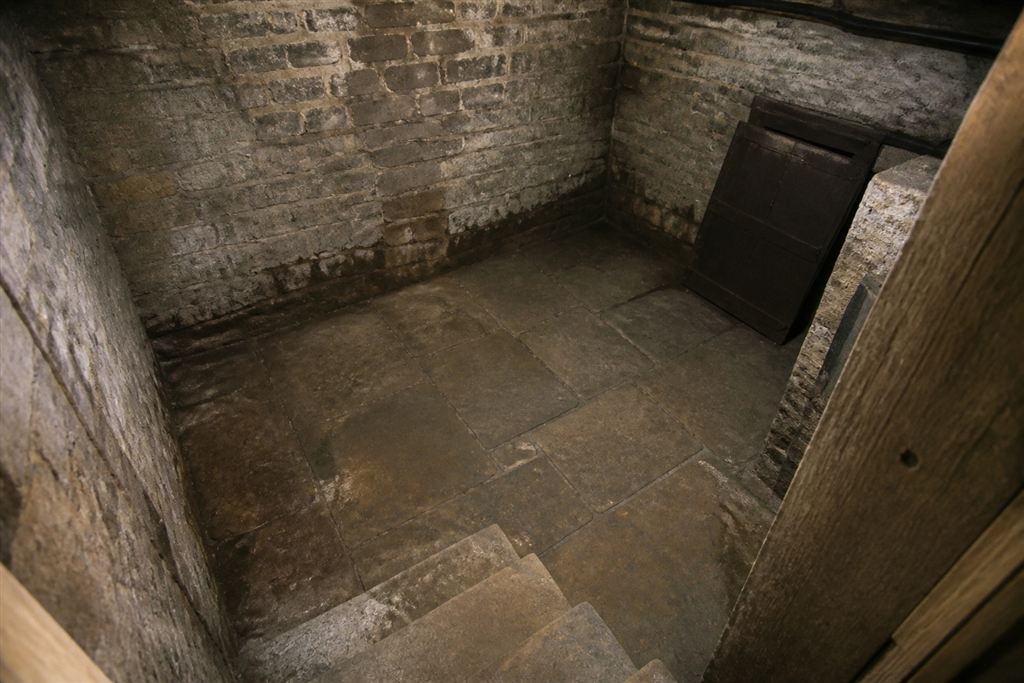
Owners search “cellar tanking” because a decorator, a previous landlord, or a damp leaflet told them to tank it. In a Moortown shop cellar the result is frequently:
- cement slurry on brick that has blistered where the combined drain surcharged
- bitumen painted around a pavement hatch, now detached
- a timber lining with no cavity, trapping moisture against the party wall of a through-semi
What they have is a barrier (Type A) on a wall that still moves with the neighbour and still wets from the street. What they need is a decision: can a drained membrane fix over the old coat, or must the coat come off so the channel can sit on sound brick?
Spine A answers “what do we install when you ask us to tank a cellar?” Spine B answers “the tanking that is already here — keep it or take it off?”
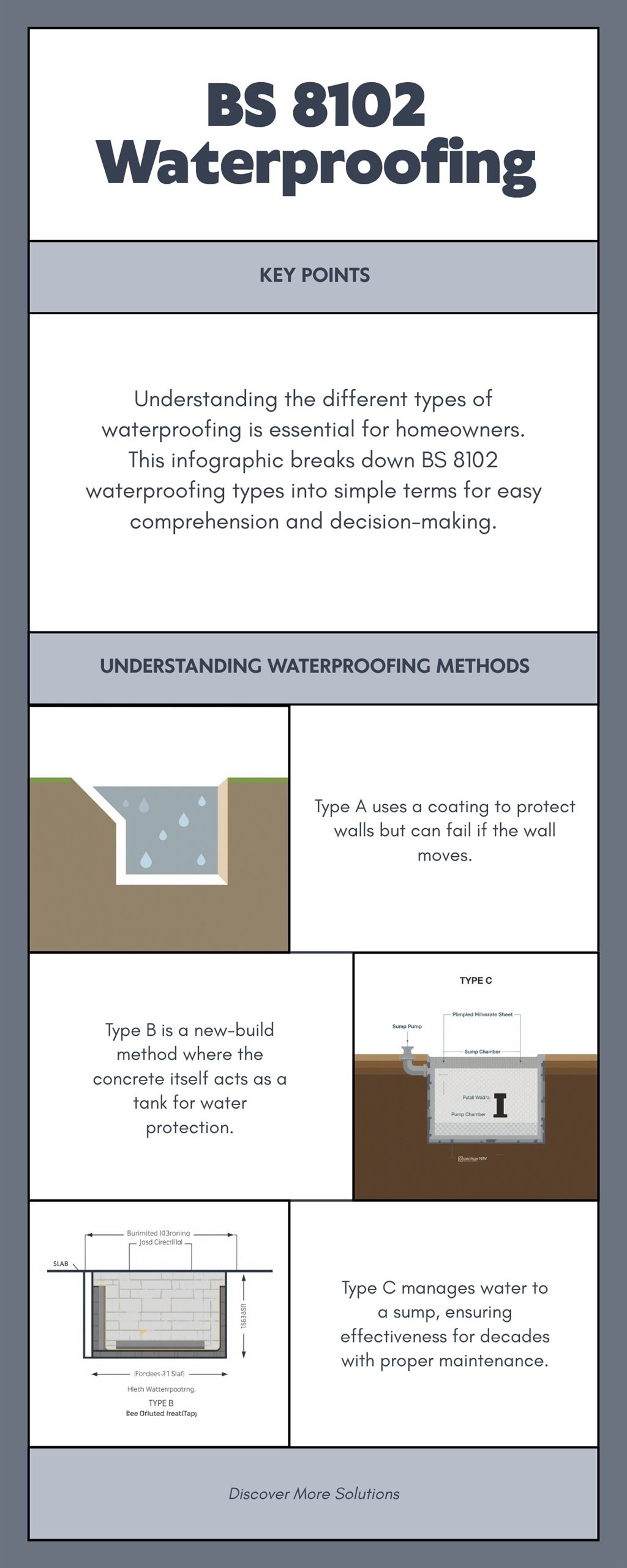
Diagram — BS 8102 types in plain English. Illustrative, not a site photo.
Overlay or strip on this particular wall
On Street Lane stock rooms and High Moor through-semis the call is local, not a manufacturer slogan:
- Overlay when the old slurry or bitumen is well bonded, the brick behind is not hollow, and we can still form a channel at the floor. Type C membrane can sit on a failed-but-adhered barrier.
- Strip when the coat is loose, salt-blown, or hiding the hatch reveal; when timber linings have no drainage; when we need to see the party-wall joint before anyone serves a Party Wall notice.
We do not “tank over tanking” as a habit, and we do not strip every room to bare brick as a habit. The discovery survey maps moisture and tap-tests the coat. Shop cellars sometimes have two generations of finish — a 1980s bitumen and a later slurry. That stack is a strip.
Through-semis add a courtesy problem: hammering slurry off a party wall is noisy for the house next door, and it may be notifiable work. Overlay, when honest, is quieter. That is a Moortown reason, not a product reason.
Type C when “cellar tanking” is what you typed
Once the coat is decided, the system in the room is still usually Type C cavity drain: membrane, channel, sump, pumped outfall on a tight plot. Cementitious tanking as a whole-room redo is the option we talk people out of on this fabric, because the next surcharge from Street Lane drainage will find the same hatch and the same shared joint.
If a short internal wall is dry and only needs a tidy barrier, we say so. That is not “cellar tanking” of the whole box. Type C in a one-room party-wall cellar
Basement tanking as a supporting mention, not the H1
People also type basement tanking, what is basement tanking, basement tanking membrane, tanking basement. In Moortown the room is a cellar — a shop stock space or a through-semi utility — not a new habitable basement. Those phrases are allowed as supporting language. They are not the money term and not this H1. We are not a membrane shop, even though tanking membrane is part of some specs.
FAQs
The shop cellar already has black bitumen. Is that cellar tanking, and can Type C go over it?
Bitumen is a form of barrier tanking. If it is still stuck, a cavity membrane can often overlay it. If it peels at the hatch, it comes off. The survey decides; we do not guess from a photo of the stair.
If we strip slurry in a through-semi, does the neighbour have to agree?
Stripping and chasing a party wall can be notifiable under the Party Wall etc. Act 1996. Agreement is not the same as “their cellar must be dry”. We record the wall on the survey and the named operator handles notices before works, not before the first visit.
Why not just re-tank with a new slurry?
Because the last slurry already told you the wall wets. A new coat on a Street Lane surcharge path fails in the same places. A drained cavity accepts that the brick will get wet.